Introduction
Imagine standing in a quiet field. The air is calm. In front of you is an olive tree, strong and full of life. Its branches stretch wide, and its leaves shine softly in the light. There is a deep sense of peace around it.
Now imagine seeing this tree in a dream… or noticing it again and again in your life. You may stop and wonder, “What does this mean in the Bible?”
In Scripture, the olive tree is not just a plant. It is a powerful symbol filled with spiritual meaning, hope, and God’s presence. From the story of Noah’s ark to the teachings of the apostles, the olive tree appears again and again as a sign of peace, restoration, and blessing.
If you feel drawn to this symbol, it may not be random. It could be a gentle message from God—something meant to comfort your heart and guide your path.
So what is the olive tree meaning in the Bible, and what is God trying to show you through it?
Let’s explore this beautiful symbol and uncover its deep spiritual message.
Biblical Meaning of Olive Tree
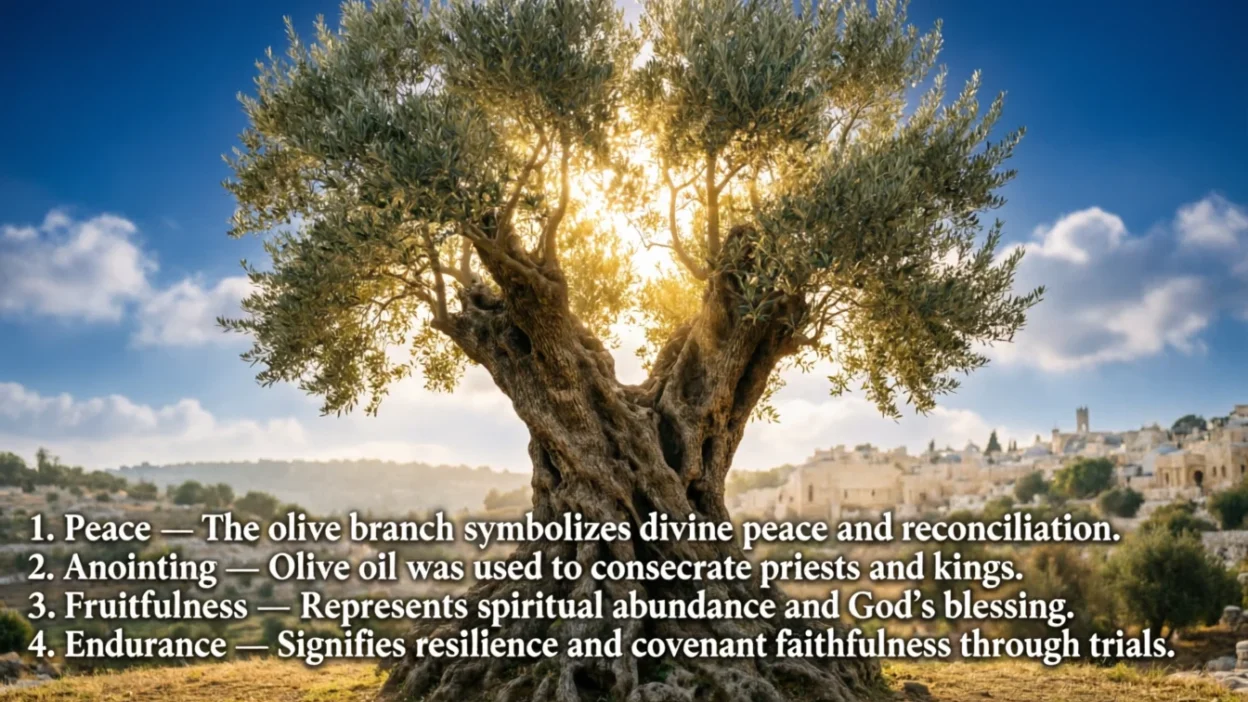
The olive tree meaning in the Bible is strongly connected to peace, blessing, fruitfulness, and a close relationship with God.
🕊️ A Symbol of Peace and New Beginnings
One of the most powerful moments involving the olive tree is found in the story of Noah.
After the flood, a dove returned to Noah with an olive leaf in its mouth (Genesis 8:11). This simple act carried a deep message:
- The storm was over
- God’s judgment had passed
- A new beginning had arrived
This makes the olive tree a symbol of:
- Peace after hardship
- Hope after waiting
- God’s mercy and renewal
If you are going through a difficult time, seeing an olive tree can be a reminder:
God is bringing peace into your life.
🌿 A Sign of Blessing and Prosperity
In the Bible, olive trees were seen as a sign of blessing and provision.
In Psalm 128:3, it says:
“Your children will be like olive shoots around your table.”
This shows:
- Growth and family blessing
- Fruitfulness and abundance
- A life rooted in God’s favor
Olive oil, which comes from the tree, was also used for:
- Anointing kings and priests
- Lighting lamps in the temple
- Healing and care
This means the olive tree represents not just physical blessing, but also spiritual richness and God’s presence.
🌳 A Picture of Spiritual Growth
The olive tree is known for its long life and deep roots. It can survive in hard conditions and still produce fruit.
Because of this, it symbolizes:
- Endurance in faith
- Spiritual strength
- Steady growth over time
In Jeremiah 11:16, God calls His people a “green olive tree, beautiful with good fruit.”
This shows how God sees those who trust Him:
- Strong
- Alive
- Full of purpose
Even when life is hard, God is growing something beautiful inside you.
⚠️ A Warning About Staying Connected
The olive tree also carries an important warning.
In Romans 11:17-24, believers are compared to branches of an olive tree. Some branches were broken off because of unbelief, while others were grafted in.
This teaches us:
- Stay connected to God
- Keep your faith strong
- Do not drift away spiritually
It is a loving reminder that true life comes from remaining rooted in God.
Spiritual Significance and Symbolism
The spiritual symbolism of the olive tree is rich and deeply personal. It speaks of peace, healing, and transformation.
🌱 A Journey of Growth
Like an olive tree, your faith grows slowly but surely.
You may not see change right away, but God is working:
- In your prayers
- In your struggles
- In your quiet moments
Growth takes time, but it leads to strong roots and lasting fruit.
🙏 A Sign of God’s Presence
The olive tree reminds you that God is near.
Its oil was used to anoint people, showing that:
- God chooses you
- God is with you
- God has a purpose for your life
When you feel alone, remember:
God’s presence is always with you.
✨ Healing and Restoration
Olive oil was often used for healing in biblical times.
This connects the olive tree to:
- Emotional healing
- Spiritual renewal
- Restoration after pain
If your heart feels heavy, this symbol brings a gentle message:
God is healing you, step by step.
Biblical Interpretations in Dreams or Real Life
Seeing an olive tree in dreams or daily life can carry a beautiful spiritual message.
🌙 In Dreams
- Healthy olive tree
→ A sign of peace, growth, and blessing - Olive branch or leaf
→ A message of hope and new beginnings - Dry or damaged tree
→ A reminder to reconnect with God and restore your faith
🌅 In Daily Life
If you keep noticing olive trees or related symbols:
- God may be bringing peace into your situation
- You are entering a season of growth and blessing
- Healing is taking place in your life
Take a moment to pray and reflect. Ask God what He is showing you.
Practical Lessons & Faith Insights
The olive tree teaches simple but powerful truths:
- Stay rooted in God’s Word
- Trust His timing for growth
- Receive His peace and healing
Even when life feels slow, God is working in you.
Conclusion
The olive tree meaning in the Bible is a beautiful message of peace, blessing, and deep spiritual growth. It reminds us that God brings hope after storms, healing after pain, and life after waiting.
If you see this symbol, take it as a sign of comfort.
God is near, and He is growing something good in your life.
Stay rooted in Him, and you will flourish in ways you never imagined.